


Posted on

All About the Signs and Symptoms of Stroke

Brain

All About the Signs and Symptoms of Stroke

A stroke is a sudden loss of brain function. There are two main types of stroke, this includes an ischemic stroke, caused by the interruption of blood flow to the brain or a hemorrhagic stroke, caused by the rupture of blood vessels within the brain. Brain damage can occur from stroke because neurons of the affected area of the brain can die when they are deprived of oxygen and nutrients.

When facing a stroke every second counts. By recognizing symptoms and acquiring treatment you can save yourself from brain damage.

By knowing and understanding these symptoms one can be prepared to take hurried action and perhaps save a life – possibly even your own life. Here are the most prevalent symptoms in both men and women:

Numbness – Sudden numbness in face or limbs, especially on only one side of the body.

Confusion – Sudden confusion or difficulty understanding speech.

Vision – Sudden unexplainable blurred vision or loss of sight in one or both eyes.

Dizziness – Dizziness leading to loss of balance or lack of coordination.

Headache – Sudden severe headache with no explanation.

Remember to act F.A.S.T:

F – Face: Ask the individual to smile. Does one side of their face drop?

A – Arms: Ask the person to raise both arms. Does one arm drift downwards?

S – Speech: Ask the person to repeat a simple phrase. Is their speech slurred or jumbled?

T – Time: If you observe any of these signs, call 9-1-1 immediately

It is important to remember the facts above because unfortunately every 7 minutes in Canada, someone dies from heart disease or stroke (Statistics Canada, 2011c), making it the third leading cause of death in Canada (Statistics Canada, 2012). We pray you and your family and friends are never faced with this issue. May you have any questions on first aid or safety please feel free to contact the First Aid Canada Team: 1-855-322-4243.

Life is Precious. Be Prepared.

Posted on

Tips for Staying Safe this Halloween

Children Trick-or-Treating

Tips for Staying Safe this Halloween

Trick-or-Treat! Halloween is just around the corner so the First Aid Canada Team is here to provide you with some safety tips to enjoy your night to the fullest, as well as safest:

Tips for Children

  • Trick or treat with you parents and/or groups of people
  • If you are heading out without your parents be sure to give enough time to return home by curfew
  • Wear reflective clothing or that which is vibrant colours
  • Avoid wearing masks, opt for face paints instead
  • Wait to cross the street at lights and cross walks and avoid from walking out behind cars
  • Bring a waterproof coat if there is a chance of rain

Tips for Parents

  • Plan a route in advance, be conscious about the weather
  • Educate your children on pedestrian etiquette and safety
  • Place the child’s name and number inside their costume
  • Inspect the child’s candy upon returning home
  • Keep in mind gum and hard candy can pose as a choking risk for smaller children
  • Be sure to wear reflective clothing if you are accompanying your child
  • Consider bringing along a small, compact first aid kit, such as our Belt Pack Kit
  • If you are not accompanying your child be sure to set a respectable curfew

Tips for Home Owners

  • Rake leaves any leaves as these can be extremely slippery
  •  Clear driveway and door path of hazards or obstructions
  • Have quality lights outside to guide guests
  • Provide allergy-conscious treats, such as those that are peanut-free
  • Providing small toys such as cars or bouncy balls is a healthy alternative
  • Use alternative candles in your pumpkins, such as those battery-operated

We hope you have a fantastic and safe Halloween. Please feel free to contact the First Aid Canada team should you have any questions on first aid and safety: 1-855-322-4243. Happy Halloween!

Life is Precious. Be Prepared.

Posted on

What to do if you knock out a tooth?

Girl Missing Tooth

First Aid for Knocked-Out Tooth

No one wants to think about the possibility of having a tooth knocked out or picture it. However, with all things in life it is important to be educated when you feel this could be a danger, for example if you are a hockey player, cyclist or work in an environment where this could be a future risk.

Step 1: Collect Teeth and/or Fragments

  • Collect fragments
  • Only touch the crown (top part of the tooth), be sure to not touch the root
  • Rinse tooth gently if necessary

Step 2: Re-Insert or Store Teeth

  • Rinse tooth with warm water
  • If possible reinsert tooth in correct socket and bite down on gauze
  • If teeth cannot be reinserted store in whole milk or between cheek and gum (this prevents the tooth from drying out

Step 3: Treat Injury

  • Use sterile gauze or cloth to control bleeding
  • Apply a cool compress to reduce pain and swelling
  • If necessary, take ibuprofen or acetaminophen for pain relief

Step 4: Seek Help

  • If you were able to reinsert teeth successfully see a dentist immediately
  • If the teeth were unable to be reinserted go to an emergency room
  • For all chipped or broken teeth see a dentist

May the loss of a tooth never happen to you!

Products such as gauze and absorbent dressings are available on the First Aid Canada site, however it is recommended to have a quality first aid kit onsite at work or in sporting environments.

Some of our most commonly purchased kits in sporting environments include:

For additional kits for other environments such as workplace or home, click here. Please, feel free to contact the First Aid Canada Team with any questions you may have regarding first aid and safety: 1-855-322-4243. We are here to keep you prepared.

Life is Precious. Be Prepared.

Posted on

Tips for Babysitting First Aid

Babysitting

Tips for Babysitting First Aid

Being a responsible caretaker means being prepared. Feeling confident in your problem solving and first aid skills can allow you to relax and focus on the children you are caring for.

Here are a few simple tips to keep in mind while child-minding:

Stay Focused

It is important to keep your eyes on the children at all times while they are awake. There can be an assortment of hazards both indoors and outdoors with appliances, plants, animals, etc. If you are asked to complete an additional task by the parents while you are minding the children be sure they are in eyesight while completing the task. After the children are put to bed, be sure you are close enough to hear them if they should wake up and need assistance.

Know Key Contacts

It is a great idea to have key contacts listed within the home and on yourself whether it be on a piece of paper or in your cellphone. These key contacts should include the child’s parents/guardians, additional family members, neighbours, family doctor and any other contacts which the parents feel may be necessary.

First Aid Skills and Supplies

Before you accept a new babysitting job make sure you are fully capable of handling an emergency should one occur. There are various babysitting courses offered within the community, however it is advised young babysitters enroll in additional courses such as an Infant CPR course or Standard First Aid and CPR.

While on the job, be sure to know where the families’ first aid supplies are located within the household and that they have the necessary supplies, for example:

First Aid Canada offers smaller compact kits which are helpful to bring along on the job:

Feel free to contact the First Aid Canada Team with any questions you may have regarding first aid and safety: 1-855-322-4243. We are here to keep you prepared.

Life is Precious. Be Prepared.

Posted on

Prince Edward Island Workplace First Aid Requirements

Prince Edward Island Harbour

Prince Edward Island First Aid Requirements

The first aid requirements for businesses in Prince Edward Island are based on the number of employees working on a given shift.

For the most current regulations, refer to Section 9.11 (pg. 16 of 116) of the
PEI Occupational Health and Safety Act: General Regulations.

1 Employee

  • Prince Edward Island #1 Kit
     

2-19 Employees

  • Prince Edward Island #2 Kit
     

20+ Employees
*low hazard workplace

  • Prince Edward Island #3 Kit
     

20-99 Employees
*workplaces other than low hazard

  • Prince Edward Island #3 Kit
     

100+ Employees
* workplaces other than “low hazard”

  • First Aid Room

Vehicles & Boats

If vehicle or boat is used as a “workplace” see above.

If vehicle or boat is used solely to transport more than 1 worker to and from a workplace then 1x Prince Edward Isand First Aid Kit #1 is needed (6 people or less). For more than 6 people, 1x Prince Edward Island First Aid Kit #2 is needed.

Links to Kits

First Aid Canada is pleased to offer all kits required above well as additional products, equipment and supplies. A highly recommended item to any workplace is an Automated External Defibrillator as it has the power to save lives – for more information on AEDs, click here. If you have any questions regarding first aid and safety in the workplace, please do not hesitate to contact the First Aid Canada Team.

Life is Precious. Be Prepared.

Posted on

How to Prevent the Flu

 Woman Sneezing

How to Prevent the Flu

For the majority catching a flu is a complete nuisance – interrupting your life and leaving you feeling crumby for a couple of weeks, but for some a flu can mean much more. People with certain health conditions such as asthma, heart disease, diabetes or a weakened immune system can be hit a lot harder by flu season and in some serious cases this can be life-threatening.

Get Vaccinated

The “Flu Shot” is recommended by experts as it is the single best way to avoid the flu. The vaccine works by injecting a weakened strain of the flu virus into your body so your immune system will learn to fight against it and prevent it in the future. There are little to no side effects when considering this option, some experience a sore arm the following day, but this vaccine will never give you the flu virus itself. 

Create Germ Barriers

You’ve seen it before – someone sneezes in public and is without a tissue… Germs can linger on surfaces for up to 8 hours after someone has transferred them there. If you happen to touch a contaminated surface while germs are still alive there is a chance illness, more specifically the flu can be transferred to your body if you happen to put your hands near your eyes, nose or mouth. It is important to then take preventative measures whenever and wherever you can to reduce your germs from transmitting and receiving the germs of others. Here are a few simple tips to take into consideration:

Wash your hands with warm water and soap

Maintain Your Health

You only have one body so it is very important that you nourish it to grow healthy and strong. A stronger immune system means the ability of your body to fight off illnesses as they approach. A coupe key tips to consider every day are:

  • Eat a balanced diet
  • Drink 8 glasses of water
  • Exercise 3-4 times per week
  • Take 10,000 steps per day
  • Get a minimum of 7 hours of sleep per night

Quit Smoking

It isn’t a new fact: smoking is very bad for you. In addition to increasing your risk of cancer and lung disease, smoking can make you more susceptible to the flu. There is evidence behind the fact that smokers get more flu infections than non-smokers and have an increased risk of dying from the flu so think twice before lighting up.

Take Time Off

If you do come down with the flu this season, be considerate. The flu is contagious for up to a week after you become ill. Take safety measures to ensure your friends, family, and co-workers do not come down with your sickness.

Follow these tips to keep the flu from spreading to others:

  • Stay home until you are feeling better and your fever has been gone (without the help of medicine) for at least 24 hours
  • If you have to sneeze or cough and are without a tissue, do it into your elbow
  • Throw away all used tissues away immediately
  • Wash and or sanitize your hands consistently

Wishing you a flu-free season! Feel free to contact the First Aid Canada Team with any questions you may have: 1-855-322-4243. We are here to keep you prepared.

Life is Precious. Be Prepared.

Posted on

What Every Hockey Team Needs

Panorama of Community Ice Rink

 What Every Hockey Team Needs

With the hockey season beginning it’s time to get prepared! It is important to gel as a team and work together whether it be with skills or in the case of an emergency.

Responsibilities every team has to maintain:

  • Accurate medical information files on all players
  • A player injury log even for small injuries
  • A regulation first aid kit

Additional responsibilities of a team:

  • Bring the First Aid Kit to all team activities, ex. Off-ice training and away games
  • Implement an effective Emergency Action Plan with your team and practice it regularly to ensure all involved understand their roles and are prepared to act promptly when an incident occurs

It is very important to coach players to recognize injuries that require a player to be removed from action. In a situation where a player is injured on the ice, follow these steps closely:

  • Take control and assess the situation when coming into contact with the injured player
  • Instruct the player to lay still
  • Instruct bystanders to leave the injured player alone
  • Do not move the athlete and leave all equipment in place
  • Evaluate the injury and situation
  • Once the severity of the injury is determined, make a decision whether or not an ambulance or medical care is required
  • If the injury is serious and warrants immediate attention that you are not qualified to provide, seek out someone with the highest possible level of first aid/medical expertise

Automated External Defibrillators are becoming more and more prevalent in community centres and specifically ice arenas. AEDs are used to save lives by shocking the heart when an individual falls under cardiac arrest. For more information on how they operate check out our blog: The SHOCKING Truth Behind AEDs.

Here are a couple of real life examples from Global News in Canada of how a defibrillator at an arena has proven to save lives:

We hope you never come across an emergency in your life; however it is important to be prepared. Here is a list of all of our Athletic & Sports kits, stocked and ready for all types of injuries:

First Aid Canada is pleased to offer all kits required above as well as additional products, equipment and supplies. If you have any questions regarding first aid and safety, please do not hesitate to contact the First Aid Canada Team at 1-866-322-4243.

Posted on

Nova Scotia Workplace First Aid Requirements

Halifax, Nova Scotia Skyline

Nova Scotia Workplace First Aid Requirements

The first aid requirements for workplaces in Nova Scotia are based on the number of employees working on a given shift.

For more information, please refer to the Nova Scotia Occupational Health and Safety First Aid Regulations.

1 Employee:

  • 1x Nova Scotia No. 1 Kit

2-20 Employees:

  • 1x Nova Scotia No. 2 Kit

21-49 Employees:

  • 1x Nova Scotia No. 3 Kit

50-99 Employees:

  • 1x Nova Scotia No.3 Kit or Nova Scotia No. 3 Kit Deluxe
  • Additional bandages, antiseptics and dressings proportionate to the number of workers

100+ Employees

  • First Aid Room

The first aid supplies and services need to be accessible during all work hours. First aid supplies and the location or telephone number of the first aid attendant must be posted throughout the worksite, on easily visible signs. Reasonable time for accessing a first aid kit should be used as a rule-of-thumb to estimate if the location of the kit is adequate. (Section 9)


Links to First Aid Kits & Supplies

First Aid Canada is pleased to offer all kits required above well as additional products, equipment and supplies. A highly recommended item to any workplace is an Automated External Defibrillator as it has the power to save lives – for more information on AEDs, click here. If you have any questions regarding first aid and safety in the workplace, please do not hesitate to contact the First Aid Canada Team.

Life is Precious. Be Prepared.

Posted on

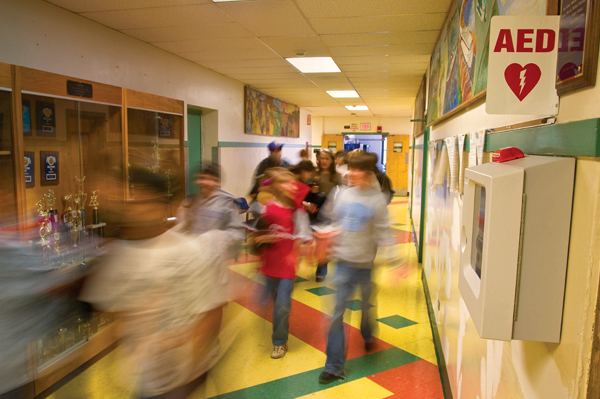
The Importance of AEDs in Schools

The Importance of AEDs in Schools

It’s back to school again and the First Aid Canada Team wants to ensure nationwide safety in our schools and that means becoming educated on the importance of Automated External Defibrillators. AEDs are now becoming more and more prevalent in public settings, especially schools.

Every year, over 40,000 Canadians suffer sudden cardiac arrest (SCA) – that’s one incident every 12 minutes. School-aged children are not immune to cardiac arrest, an estimated 5,000-7,000 children die from SCA each year. Often these unfortunate incidences occur on school grounds or playing fields, as contact sport injuries can increase the odds of an SCA event. 

Check out this informative video on Matt Keene, a 17-year-old athlete who went into cardiac arrest following football practice in New Hampshire whose life was saved thanks to an AED:
 

AEDs do not just protect the student athletes, but anyone on school or campus grounds who may suffer SCA. A recent study of SCA events at NCAA Division I schools found that older nonstudents such as teachers, spectators, coaches and officials accounted for 77% of SCA cases at sporting venues.

SCA strikes people of all different ages and fitness levels without any warning. Are your teachers, coaches and children prepared for an emergency?

First Aid Canada is pleased to offer three different AED models recommended for school settings:

Life is Precious. Be Prepared.

Posted on

New Brunswick First Aid Requirements

New Brunswick First Aid Requirements

The first aid requirements for businesses in New Brunswick are based on the number of employees working on a given shift as well as the worksite type.

For the most current regulations, refer to Schedule A (pg. 10 of 24) & Schedule C (pg. 23 of 24) of the 
New Brunswick Occupational Health and Safety Act.

No High Hazard Work:

  • 1 Employee = 1 New Brunswick Personal First Aid Kit
  • 2-19 Employees = 1 New Brunswisk Basic First Aid Kit
  • 20-49 Employees = 1 New Brunswisk Basic First Aid Kit
  • 50-99 Employees = 1 New Brunswisk Basic First Aid Kit
  • 100-199 Employees = 2 New Brunswisk Basic First Aid Kits
  • 200+ Employees = 3 New Brunswisk Basic First Aid Kits, plus 1 additional kit for every 1-100 employee increment
     

High Hazard Work:

  • 1 Employee = 1 New Brunswick Personal First Aid Kit
  • 2-19 Employees = 1 New Brunswisk Basic First Aid Kit
  • 20-49 Employees = 1 New Brunswisk Basic First Aid Kit
  • 50-99 Employees = 1 New Brunswisk Basic First Aid Kit
  • 100-199 Employees = 3 New Brunswisk Basic First Aid Kits
  • 200+ Employees = 4 New Brunswisk Basic First Aid Kits, plus 1 additional kit for every increment of 1-100
     

Links to First Aid Kits:

First Aid Canada is pleased to offer all kits required aboves well as additional products, equipment and supplies. A highly reccomended item to any workplace is an Automated External Defibrillator as it has the power to save lives – for more information on AEDs, click here. If you have any questions regarding first aid and safety in the workplace, please do not hesitate to contact the First Aid Canada Team.

Life is Precious. Be Prepared.

Posted on

The Toronto Search & Rescue T-SAR 2 Christening Ceremony

The Toronto Search & Rescue T-SAR 2 Christening Ceremony

On August 22nd First Aid Canada supported the Volunteer section of the Toronto Search and Rescue Team by sponsoring and attending the T-SAR 2 Christening Ceremony which took place at the Cathedral Bluffs Yacht Club.

The T-SAR 2 Christening Ceremony celebrated the final completion of the vessel and the Toronto Search and Rescue Volunteer Team as a whole. It was a four year process to allocate volunteers, acquire all of the necessary supplies, equiptment and organize the launch party (which was a huge success)! As a company, First Aid Canada sponsored a table and contributed oxygen kits and equipment which was organized by Patrick Curtis, the main contributor for the event (photographed above).
 

 Vice President of Sales at First Aid Canada, Aaron Wayne

 Aaron Wayne, Vice President of Sales at First Aid Canada

Toronto Search and Rescue – Marine is a new Toronto-based, all-volunteer marine search and rescue unit whose primary mission is to improve safety in Toronto’s waters by helping people in distress and in danger, and preventing loss of life and damage to property, through education and outreach programs.

Visit www.torontosearchandrescue.com or call 416-862-SAFE (7233) for more information or to apply to volunteer.

Life is Precious. Be Prepared.

Posted on

Newfoundland & Labrador First Aid Requirements

Newfoundland and Labrador First Aid Requirements

Newfoundland & Labrador First Aid Requirements

The first aid requirements for businesses in Newfoundland and Labrador are based on the number of employees working on a given shift as well as the type of industry.

For the most current regulations, refer to the 
Newfoundland and Labrador Occupational Health and Safety First Aid Regulations
. For a brief summary of the required kits please see below:

1 Employee:

1 Newfoundland & Labrador #1 Kit

1-14 Employees:

1 Newfoundland & Labrador #2 Kit (or higher if required by an officer)

15-199 Employees:

1 Newfoundland & Labrador #3 Kit (or higher if required by an officer) 

200+ Employees:

1 First Aid Attendant, plus 1 Newfoundland & Labrador #3 Kit for each existing group of 25

Links to First Aid Kits:

First Aid Canada is pleased to offer all kits required above well as additional products, equipment and supplies. A highly recommended item to any workplace is an Automated External Defibrillator as it has the power to save lives – for more information on AEDs, click here. If you have any questions regarding first aid and safety in the workplace, please do not hesitate to contact the First Aid Canada Team.

Life is Precious. Be Prepared.