


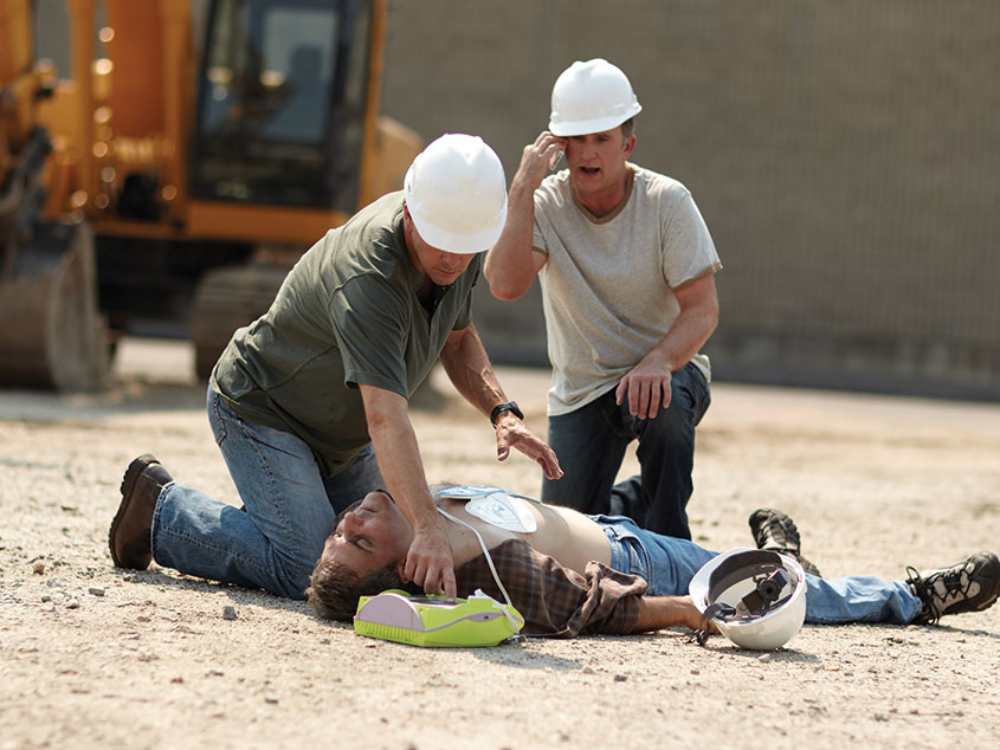
Beginning January 1, 2026, many construction sites in Ontario will be legally required to have Automated External Defibrillators (AEDs) on site under the updated O. Reg. 157/25. These changes are designed to improve emergency preparedness and increase survival rates during sudden cardiac arrest — a real risk on high-hazard job sites.
Below is a simplified breakdown to help construction companies and site supervisors get compliant.
When Your Site Must Have an AED
You must install and maintain an AED if:
- Your site has 20 or more regularly employed workers, and
- The project will last three months or longer.
Short-term or smaller sites may not require one, but having an AED is still strongly recommended.
AED Requirements: What the Law Specifies
To comply with Ontario’s new regulations:
Choose a Health Canada–licensed AED
Only AEDs approved as medical devices by Health Canada meet the new standard.
Stock the Required Accessories
Each AED kit must include:
- 1 CPR mask
- 1 pair of scissors
- 2 pairs of medical-grade gloves
- 1 razor
- 1 garbage bag
- 4 absorbent towels
These must be maintained and replaced as needed.
Store and Protect the AED Properly
- Keep the AED and accessories together in a labeled kit.
- Protect it from moisture, dust, extreme temperatures, and site contaminants.
- Add extra protection if stored outdoors.
- Install clear signage showing AED location, including the heart-and-lightning-bolt symbol and the required text (“AED” / “Automated External Defibrillator”).
Inspection, Testing & Training
To remain compliant:
- Test and maintain the AED according to manufacturer guidelines.
- Have a trained “competent worker” perform a quarterly inspection.
- Keep an inspection log with dates, names, and signatures.
- Ensure at least one worker trained in CPR/AED use is present whenever work is taking place.
How to Prepare Before January 1, 2026
- Select a Health Canada–licensed AED suitable for construction environments.
- Set up compliant signage and storage.
- Build an inspection and record-keeping system.
- Train workers so there is always someone on site who can use the AED confidently.
Need Help? First Aid Canada Is Your Trusted Resource
First Aid Canada is here to help construction companies meet these new provincial requirements. We offer:
- Health Canada–approved AEDs
- Compliant AED accessory kits
- Storage, signage, and environmental protection solutions
- CPR/AED training options
- Expert guidance on inspections and maintenance routines
If you have questions or need help choosing the right AED setup, First Aid Canada is a reliable source for support, equipment, and ongoing advice.