
Thick safety manuals and polished compliance programs do not impress the team at First Aid Canada. That may sound strange coming from a company that lives and breathes workplace safety, but meeting the rules is the floor, not the goal.
A while back, First Aid Canada worked with a client who said as much out loud. They did not want the bare minimum, they wanted what was best for their people. That framing does not come up nearly as often as it should. Most conversations start with requirements, budgets, and what legally needs to be in place, which is fair, because every company works within real constraints. But every so often a business flips the question and asks what they should have available if one of their employees ever needed help.
Here is the encouraging part. The workplaces with the strongest safety programs are rarely the ones spending the most money. They are the ones paying attention. Almost everything that separates a genuinely prepared workplace from a technically compliant one comes down to culture, and culture is built out of ordinary decisions that anyone can make.
Safety culture starts with curiosity, not a catalogue
The most common mistake is buying equipment before understanding the workplace. It feels productive, and it produces a receipt, which is not the same as producing readiness.
Before ordering anything, walk the site and ask questions that nobody has asked in a while. Where do people actually get hurt? What is on the shelves in the back? How far is the nearest hospital, honestly, at four in the afternoon? Is anyone working alone, after hours, or out of a vehicle?
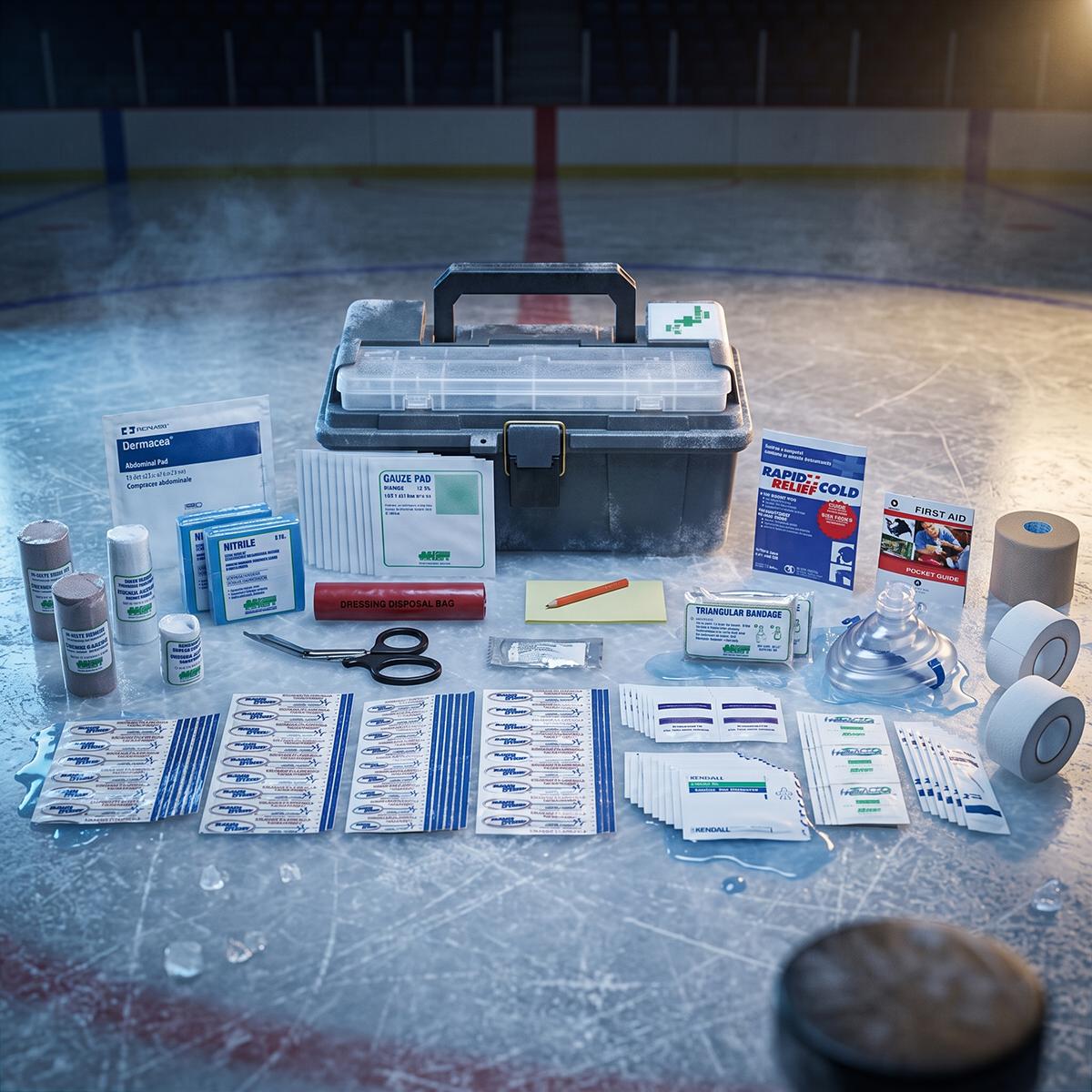
Twenty minutes with a notepad will tell a business more than any product page will, and the questions themselves do half the work. People notice when leadership walks the floor asking what could go wrong, and they start noticing things too. A lone driver, a busy kitchen, and a warehouse floor all carry different risks, which is why First Aid Canada stocks regulation kits alongside specialty kits for marine, trauma, athletic, burn, and food processing environments. Matching the kit to the hazard is the first real decision, and it only gets made if somebody looked first.
Attention only counts when it becomes habit
Preparedness drifts. That is the most consistent thing First Aid Canada sees across every industry, and it never happens dramatically. A kit gets used for a couple of scrapes and nobody mentions it, so it never gets restocked. An eyewash bottle gets opened and topped up without anyone realizing that changes the shelf life. None of that sounds serious on its own, but when something goes wrong, all of those small details matter at once.
Good intentions do not survive a busy quarter. Habits do. So attach the check to something that already happens. A supervisor confirming the vehicle kit is stored properly before the crew leaves the yard takes ten seconds. A restaurant adding the kit and eyewash to the same opening checklist that covers temperatures and cleaning means it never gets forgotten. An office manager reviewing contents and expiry dates on the first Monday of every quarter turns an annual scramble into a two minute habit.
The cultural shift is small but real. Once a check lives inside a routine, it stops depending on whether anyone feels motivated that week. First Aid Canada supplies accident record books for the same reason, because writing down what was used is what tells the next person to reorder it.
Assumption is the quietest risk in the building
Ask a room who is responsible for the AED and watch what happens. Usually there is a pause, then someone offers a name with a question mark at the end of it. That pause is the culture problem. Nobody is being careless. Everyone simply assumes it is handled, because it always has been, by someone.
The AED punishes that assumption more than anything else on site. Pads expire, batteries expire, and pads are single use, so a unit that responded to an emergency in March is not ready in April unless somebody reordered. None of that announces itself. The unit chirps, the chirp becomes background noise, and the workplace carries on believing it is protected. The same logic runs through everything else. The kit was restocked because it is always restocked. The eyewash is fine because it looked fine.
Workplaces that break the pattern do one thing differently. They put a name on it. Not a department, not a committee, a person, said out loud, who knows the expiry dates are theirs to watch and who has the authority to order replacement pads without asking three people first. First Aid Canada stocks replacement pads, batteries, and accessories precisely because the reorder is trivial. The hard part was never the part. It was deciding, before the emergency, whose job it was.
Safety cannot live with one person
Most workplaces have someone who owns safety, whether by title or because they ended up with it. That is fragile, since emergencies do not check who is in the building that day. It is also unfair to the person carrying it, and it teaches everyone else that safety is not their problem.
Fire drills work because the scenario has been rehearsed by everyone, not just the fire warden. Medical emergencies rarely get the same treatment, even though most workplaces have a policy sitting in a manual somewhere. First Aid Canada recommends running short scenario conversations at least once a year, and quarterly if possible. Ask the team what they would do if someone collapsed in the lunchroom. Who calls 911? Who grabs the AED? Who meets the paramedics at the door? Who stays with the person?
Include the people who are not trained and are not expected to lead. They will be standing there regardless, and most of them end up playing some role. Adding the same questions to new hire orientation means a person’s first week teaches them that this is something the whole team owns, rather than something handled quietly by one desk in the corner.
Treat training as a rhythm, not an event
Certifications are generally valid for three years, and plenty of workplaces quietly treat that as three years of coverage. In reality, most people forget a good portion of what they learned within a few weeks, because skills fade when they are not used. That is normal, and it is not a knock on anyone.
Keeping formal training current is the foundation, with courses that suit the workplace, whether that is CPR/AED Level C, Emergency First Aid, Basic Life Support, or Intermediate Standard First Aid. First Aid Canada delivers all of them on site, with instructors who travel to you, which removes the biggest reason teams put it off. It also means a whole shift trains together, and a team that trained together tends to respond together. That shared experience is worth more than the certificate.
Then stagger the renewals on purpose. If every responder took the same course on the same day, they all expire on the same day, and coverage can quietly drop to nothing. Spreading renewals out, and making sure every shift and location has trained people rather than concentrating them in one department, takes an afternoon to plan and keeps readiness continuous rather than cyclical.
One standard, wherever people happen to be
For businesses running multiple sites, the problem is rarely a lack of care. It is consistency. One location is stocked and trained while another has an expired kit and nobody sure who the responders are. Employees notice that gap, and what they take from it is that safety depends on which building you walk into.
Removing the guesswork means the same kit type for the same risk profile, AEDs placed and signed the same way everywhere, and training scheduled centrally instead of site by site. Custom branded kits help more than people expect here. A kit that looks identical at head office, the warehouse, and the retail floor is a kit that any employee recognizes instantly, wherever they happen to be that day. First Aid Canada’s Request a Quote tool makes building that kind of order across locations far simpler than a dozen back and forth emails.
People believe what they can see
None of this is complicated. Kits that are organized and obviously stocked. Eyewash stations that are maintained. Training that happens on schedule rather than when someone remembers. Regulations addressed before an inspector points them out.
Employees read those signals accurately. A well maintained kit says the company thought about them before anything happened. An expired one says the opposite, no matter what the manual claims. Most safety managers and operations leaders First Aid Canada speaks with already care deeply about their teams. The opportunity is simply to make that care visible, in the details that hold up on the days nobody is watching.
Build a workplace that is genuinely ready with regulation and custom first aid kits, AEDs, eyewash, and on site training at firstaidcanada.com.
FAQ
How does a business figure out which first aid kit it needs?
Start with a walk through and an honest look at the hazards, the number of people on shift, and where they work. From there, First Aid Canada can match a regulation or specialty kit to the environment, whether that is an office, a warehouse, a kitchen, a vehicle, or a job site.
Who should be responsible for workplace first aid supplies and AEDs?
One named person, not a department. Pads, batteries, and kit contents all have expiry dates, and single use AED pads need reordering after any deployment or training session. Assigning a specific person, with the authority to reorder, is what keeps that from being missed.
How can a business improve safety without a dedicated safety manager?
Match the kit to the actual hazards, name someone to own the equipment, and add short emergency scenario conversations to team meetings and new hire orientation. Booking training delivered at the workplace keeps skills current without pulling the team offsite, and it spreads the knowledge beyond one person.